
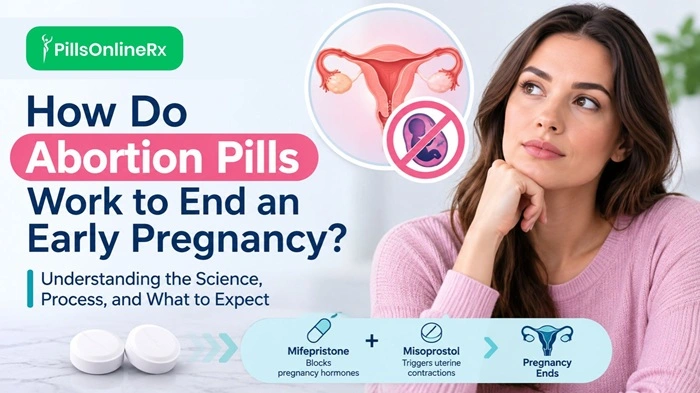
An early pregnancy does not end because of a single medication acting alone. In the commonly used combination regimen, two medicines—mifepristone and misoprostol—work in sequence. One interrupts the hormonal support a pregnancy needs to continue; the other helps the uterus contract and empty.
This process is known as medication abortion. Understanding what each medicine does, how the process unfolds, and why follow-up matters can help people make informed decisions about their reproductive healthcare.
Here is a closer look at the science behind abortion pills, what happens inside the body, and the important medical considerations to understand.
What Are Abortion Pills?
Abortion pills are medicines used to end an early pregnancy without a surgical procedure. The standard FDA-approved combination regimen in the United States uses two prescription medicines:
Mifepristone: Blocks progesterone, a hormone needed to maintain pregnancy.
Misoprostol: Causes the uterus to contract and helps expel the pregnancy tissue.
These medicines have different functions, but they work together as part of a treatment process. The combination is commonly called medication abortion or medical abortion.
In the United States, the FDA-approved mifepristone regimen is indicated for ending an intrauterine pregnancy through 70 days (10 weeks) from the first day of the last menstrual period. Clinical guidance and recommendations may differ in other settings, so the FDA-approved U.S. indication should not be confused with every regimen used internationally.
How Do Abortion Pills Work Inside the Body?
The combination works through two main biological actions: blocking progesterone and stimulating uterine contractions.
1. Mifepristone blocks progesterone
Progesterone is a hormone that helps maintain the uterine lining during pregnancy. It supports the environment in which an early pregnancy develops.
Mifepristone works by attaching to progesterone receptors and blocking progesterone from activating them. Without the usual progesterone activity, the uterine lining changes and can no longer support the pregnancy in the same way.
Mifepristone also makes the uterus more responsive to prostaglandins, substances that help stimulate uterine contractions. This prepares the body for the next stage of the process.
In simple terms: Mifepristone interrupts the hormonal support needed for a pregnancy to continue and prepares the uterus for the effects of misoprostol.
2. Misoprostol causes uterine contractions
Misoprostol is a prostaglandin medication. It acts on the uterus and cervix, encouraging the uterus to contract and the cervix to soften.
These contractions help the uterus expel the pregnancy tissue. This is why bleeding and cramping commonly occur after misoprostol is used.
The bleeding may be heavier than a regular menstrual period and can include blood clots and tissue. The intensity and duration vary from person to person.
In simple terms: Misoprostol helps the uterus contract and pass the pregnancy tissue.
3. The uterus expels the pregnancy tissue
As the uterus contracts, the pregnancy tissue passes through the cervix and out of the vagina. This is the central physical part of the medication abortion process.
Bleeding and cramping are expected effects, but their intensity can vary. The amount of bleeding alone cannot reliably confirm whether the abortion is complete.
Follow-up is important because medication abortion does not have a successful outcome in every case. Some people may need additional medical treatment if the pregnancy continues or the uterus does not completely empty.
What Happens After Taking Abortion Pills? A General Timeline
Medication abortion is a process rather than a single event. The following timeline describes the FDA-approved U.S. combination regimen for eligible patients.
| Stage | What happens |
|---|---|
| First medication | Mifepristone blocks progesterone activity and interrupts hormonal support for the pregnancy. |
| 24–48 hours later | The FDA-approved regimen uses misoprostol buccally, meaning in the cheek pouch. |
| After misoprostol | Uterine contractions, cramping, and vaginal bleeding help expel the pregnancy tissue. |
| Following days | Bleeding or spotting may continue as the body recovers. |
| Follow-up | A healthcare professional assesses whether the pregnancy has ended completely. |
The pregnancy often passes within 2–24 hours after misoprostol, although individual experiences vary. Bleeding may continue beyond this period.
The timeline is not a substitute for prescribed instructions. The appropriate regimen, timing, and follow-up depend on the clinical circumstances and the healthcare professional's guidance.
Why Are Mifepristone and Misoprostol Used Together?
The two medicines have complementary functions.
Mifepristone blocks progesterone activity and makes the uterus more responsive to prostaglandins. Misoprostol then stimulates uterine contractions and helps the uterus empty.
Using them together is the preferred regimen in major clinical guidance because the combination is more effective than misoprostol alone.
However, the medicines are not interchangeable. Taking one does not automatically produce the same effect as using the recommended combination. Misoprostol-only regimens are also recognized in international clinical guidance, but they have different protocols and should not be treated as identical to the FDA-approved U.S. combination regimen.
What Does Medication Abortion Feel Like?
Experiences vary, but many people notice different symptoms during the process.
Common effects include:
- Cramping: Uterine contractions can cause cramps that range from mild to intense.
- Vaginal bleeding: Bleeding may be heavier than a typical period, particularly while the pregnancy tissue passes.
- Blood clots: Clots may appear during the process.
- Nausea or vomiting: These can occur as medication-related side effects.
- Diarrhea: Misoprostol can affect the digestive system.
- Chills or a temporary fever: These may occur after misoprostol.
Not everyone experiences all these effects. The absence of a particular symptom does not, by itself, establish whether the medication has worked.
Severe or persistent symptoms should not be dismissed as routine side effects.
How Effective Are Abortion Pills?
Medication abortion using mifepristone and misoprostol is an established and effective method of ending an early pregnancy. However, no medication regimen guarantees success in every case.
The outcome can vary with factors such as:
- How far along the pregnancy is
- The prescribed medication regimen
- Correct use of the medicines
- Individual medical circumstances
A small proportion of patients may have an ongoing pregnancy or an incomplete abortion and need further medical care. The FDA medication information reports that approximately 2–7 out of every 100 patients using the approved regimen may need a surgical procedure because the pregnancy did not completely pass or to stop bleeding.
This is why follow-up matters, even when bleeding and cramping have occurred.
How Do You Know If Abortion Pills Have Worked?
Bleeding, cramping, and passing tissue can be signs that the medication is having its intended effect. However, symptoms alone cannot confirm that the pregnancy has ended.
A healthcare professional may recommend follow-up based on the person's medical history and symptoms. Depending on the situation, assessment may include:
- A review of symptoms and bleeding
- Pregnancy hormone (hCG) testing
- An ultrasound examination, when clinically indicated
- Other evaluation if there are concerns about an ongoing pregnancy or complications
The FDA-approved U.S. regimen recommends follow-up with a healthcare professional approximately 7–14 days after mifepristone.
A standard home pregnancy test may remain positive for some time after a successful medication abortion because pregnancy hormones do not disappear immediately. Follow the timing and testing method recommended by the healthcare professional rather than relying on an early home test alone.
Can Abortion Pills End an Ectopic Pregnancy?
No. Abortion pills do not treat an ectopic pregnancy.
An ectopic pregnancy occurs when a pregnancy develops outside the uterus, most commonly in a fallopian tube. Mifepristone and misoprostol are used to end an intrauterine pregnancy; they do not reliably stop an ectopic pregnancy from growing.
This distinction is important because an ectopic pregnancy can cause internal bleeding and become life-threatening if it ruptures.
Seek urgent medical evaluation for symptoms such as:
- Severe or worsening abdominal or pelvic pain, especially on one side
- Shoulder-tip pain
- Dizziness, fainting, or weakness
- Severe abdominal pain accompanied by bleeding
Do not assume that vaginal bleeding means an ectopic pregnancy has been ruled out.
Who May Not Be Eligible for the FDA-Approved Mifepristone Regimen?
The FDA lists several conditions in which mifepristone, used with misoprostol, should not be taken under its approved regimen.
These include:
- A confirmed or suspected ectopic pregnancy
- Chronic adrenal failure
- Long-term corticosteroid therapy
- Certain bleeding disorders or use of blood-thinning medicines
- Inherited porphyria
- Allergy to mifepristone, misoprostol, or related medicines
- An intrauterine device (IUD) still in place; it must be removed before treatment
The FDA-approved indication also covers intrauterine pregnancies through 70 days from the first day of the last menstrual period.
A healthcare professional should review pregnancy timing, medical history, current medicines, and relevant symptoms before determining whether the regimen is appropriate. This list is not a complete substitute for the medication guide or individual medical assessment.
When Should You Seek Medical Attention?
Although cramping and bleeding are expected, certain symptoms require prompt medical attention.
Contact a healthcare professional or seek urgent care if you experience:
- Very heavy or prolonged bleeding
- Severe or persistent abdominal pain
- Fever that persists or begins after the expected medication-related effects
- Fainting or significant dizziness
- Feeling seriously unwell, weak, or increasingly ill
- Persistent abdominal discomfort or general malaise lasting more than 24 hours after misoprostol
- Serious infection can sometimes occur without a fever. Do not wait for every warning sign to appear before seeking help.
If you experience severe pain, fainting, signs of shock, or another potentially life-threatening symptom, seek emergency medical care.
Medication Abortion vs. Emergency Contraception: Are They the Same?
No. These are different types of reproductive healthcare.
| Medication abortion | Emergency contraception |
|---|---|
| Used to end an established pregnancy | Used to reduce the chance of pregnancy after unprotected sex or contraceptive failure |
| Mifepristone and misoprostol are used in the standard combination regimen | Options include levonorgestrel, ulipristal acetate, and certain intrauterine devices |
| Works by interrupting pregnancy support and causing uterine contractions | Works primarily by preventing or delaying ovulation, depending on the method |
| Does not prevent future pregnancy | Does not end an existing pregnancy |
The term "abortion pill" should not be confused with the morning-after pill. Emergency contraception does not end an established pregnancy, and medication abortion is not a form of emergency contraception.
Frequently Asked Questions
1. How do abortion pills work to end a pregnancy?
The standard combination uses mifepristone to block progesterone, a hormone needed to maintain pregnancy, followed by misoprostol, which causes uterine contractions and helps expel the pregnancy tissue.
2. Do both abortion pills work in the same way?
No. Mifepristone blocks progesterone activity, while misoprostol stimulates uterine contractions and softens the cervix. They have different but complementary roles.
3. How long does it take for abortion pills to work?
The timing varies. Under the FDA-approved regimen, misoprostol is used 24–48 hours after mifepristone. The pregnancy often passes within 2–24 hours after misoprostol, but bleeding and recovery can continue longer.
4. Does taking mifepristone alone end a pregnancy?
Mifepristone interrupts progesterone activity, but the FDA-approved combination regimen also uses misoprostol to help the uterus expel the pregnancy tissue. Taking mifepristone alone should not be assumed to complete the process.
5. Do abortion pills cause bleeding and cramps?
Yes. Cramping and vaginal bleeding are expected effects of the medication abortion process, particularly after misoprostol. The intensity varies from person to person.
6. Can abortion pills work without bleeding?
Bleeding patterns vary, but little or no bleeding after taking the medicines should be discussed with a healthcare professional. Symptoms alone cannot confirm whether the pregnancy has ended.
7. Can abortion pills treat an ectopic pregnancy?
No. Mifepristone and misoprostol do not treat ectopic pregnancy. A suspected ectopic pregnancy requires prompt medical evaluation.
8. Are abortion pills the same as the morning-after pill?
No. Emergency contraception helps prevent pregnancy after sex, while medication abortion is used to end an established pregnancy.
9. Is follow-up necessary after taking abortion pills?
Yes. Follow-up helps confirm that the pregnancy has ended and identifies cases that may require additional treatment. The FDA-approved regimen recommends follow-up approximately 7–14 days after mifepristone.
10. Can an abortion pill regimen fail?
Yes. An ongoing pregnancy or incomplete abortion can occur. A healthcare professional can assess the outcome and discuss appropriate next steps if treatment has not been successful.
The Bottom Line
Abortion pills work through two complementary actions: mifepristone blocks progesterone, interrupting the hormonal support needed for pregnancy, while misoprostol causes uterine contractions that help expel the pregnancy tissue.
Understanding how these medicines work is only one part of informed decision-making. Pregnancy location and timing, medical history, medication safety, access to appropriate care, and follow-up all matter.
For accurate guidance, consult a qualified healthcare professional and use medicines according to the applicable prescribing information. If you experience warning signs or feel seriously unwell, seek medical attention promptly.