
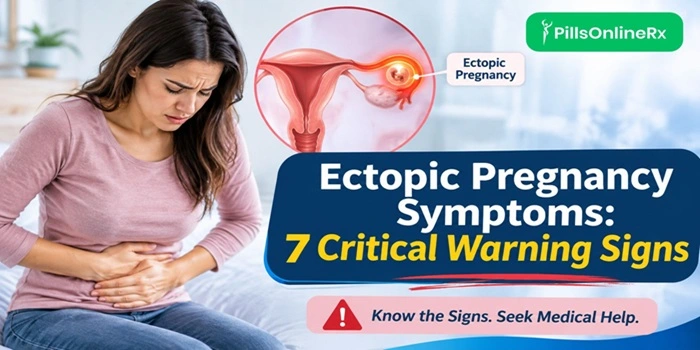
An ectopic pregnancy occurs when a fertilized egg implants and begins developing outside the uterus, most commonly in a fallopian tube. As the pregnancy grows, it can damage the surrounding tissue and cause internal bleeding. Without timely medical treatment, a ruptured ectopic pregnancy can become life-threatening.
Recognizing the early symptoms is important because an ectopic pregnancy may initially resemble a typical pregnancy or other common health conditions. Symptoms commonly develop between the fourth and twelfth weeks of pregnancy, although some people experience no noticeable symptoms initially.
Understanding the warning signs of ectopic pregnancy can help you recognize when medical evaluation is necessary and when emergency care is needed.
7 Critical Signs and Symptoms of Ectopic Pregnancy
Ectopic pregnancy symptoms can vary depending on where the pregnancy develops and whether the affected structure has ruptured. Some symptoms may be mild initially but become more severe over time.
The following are seven important signs to recognize.
1. Abnormal Vaginal Bleeding
Unusual vaginal bleeding or spotting can be an early sign of ectopic pregnancy.
Unlike a typical menstrual period, this bleeding may:
- Be lighter or heavier than your usual period.
- Appear as intermittent spotting.
- Have a dark brown or watery appearance.
- Start and stop unexpectedly.
- Occur alongside pelvic or abdominal discomfort.
Some people mistake this bleeding for a regular menstrual period or early pregnancy spotting.
When to seek care: Contact a healthcare professional promptly if you experience unusual vaginal bleeding and think you may be pregnant.
2. One-Sided Pelvic or Lower Abdominal Pain
Pain on one side of the lower abdomen or pelvis is a common symptom of ectopic pregnancy.
The discomfort may:
- Develop gradually or suddenly.
- Affect the left or right side of the lower abdomen.
- Feel sharp, stabbing, or cramping.
- Come and go or become persistent.
- Increase in intensity as the pregnancy develops.
One-sided pelvic pain can have several causes and does not automatically indicate an ectopic pregnancy. However, it requires medical evaluation when pregnancy is possible.
3. Persistent Lower Abdominal Pain or Cramping
Some people experience ongoing abdominal discomfort or cramping that differs from their usual menstrual cramps.
Possible characteristics include:
- Persistent pain in the lower abdomen.
- Cramping that does not improve.
- Discomfort that gradually becomes more intense.
- Pain accompanied by vaginal bleeding or spotting.
Severe or sudden abdominal pain can indicate a ruptured ectopic pregnancy and requires immediate emergency evaluation.
4. Shoulder Tip Pain
Shoulder tip pain is an important warning sign that should not be overlooked.
It refers to pain felt where the shoulder ends and the arm begins, rather than ordinary muscle soreness.
In an ectopic pregnancy, internal bleeding can irritate the diaphragm, the muscle separating the chest and abdominal cavities. This irritation can cause pain that is felt in the shoulder.
Shoulder tip pain may occur without an obvious shoulder injury.
Important: Shoulder tip pain during a possible pregnancy, particularly when accompanied by abdominal pain, vaginal bleeding, dizziness, or weakness, requires urgent medical assessment.
5. Dizziness, Weakness, or Fainting
Dizziness, unusual weakness, and fainting can indicate significant internal bleeding and reduced blood circulation.
Warning signs may include:
- Feeling lightheaded or unsteady.
- Sudden or unusual weakness.
- Feeling like you might faint.
- Actually losing consciousness.
- Looking unusually pale or feeling clammy.
These symptoms can develop when a fallopian tube ruptures and blood accumulates inside the abdomen.
Seek emergency medical attention immediately if you experience fainting, severe dizziness, or sudden weakness alongside possible pregnancy symptoms.
6. Rectal Pressure or Pain During Bowel Movements
An ectopic pregnancy can cause discomfort around the rectum or lower pelvis.
Some people may experience:
- Pressure in the rectal area.
- Pain when passing stool.
- Discomfort during bowel movements.
- A sensation of needing to have a bowel movement.
These symptoms may occur when blood or irritation inside the pelvis affects nearby structures.
Although digestive conditions can cause similar symptoms, unexplained rectal pressure or pain during a possible pregnancy should be medically assessed.
7. Discomfort During Urination
Changes in bladder function can sometimes occur with an ectopic pregnancy.
Possible symptoms include:
- Pain or discomfort while urinating.
- Pressure in the lower pelvic region.
- Changes in normal urination patterns.
- These symptoms are not specific to ectopic pregnancy and may also occur with urinary tract infections or other conditions.
If urinary discomfort occurs alongside pelvic pain, unusual bleeding, or a possible pregnancy, seek medical advice.
Emergency Warning Signs of a Ruptured Ectopic Pregnancy
A ruptured ectopic pregnancy occurs when the growing pregnancy damages and breaks open the structure where it has implanted, commonly a fallopian tube.
This can cause severe internal bleeding and requires immediate medical attention.
Call 911 or go to the nearest emergency department immediately if you experience:
- Sudden, severe abdominal or pelvic pain.
- Severe shoulder tip pain.
- Fainting or loss of consciousness.
- Significant dizziness or extreme weakness.
- Pale, clammy skin or signs of shock.
- Severe pain accompanied by vaginal bleeding.
Do not wait for symptoms to improve or for a pregnancy test result. If you feel faint or severely unwell, do not drive yourself to the hospital.
When Do Ectopic Pregnancy Symptoms Usually Begin?
Ectopic pregnancy symptoms commonly develop between the fourth and twelfth weeks of pregnancy, although the timing varies.
Some people initially experience no noticeable symptoms and discover the condition during an ultrasound or medical evaluation.
| Pregnancy stage | Possible symptoms |
|---|---|
| Early pregnancy | Missed period, typical pregnancy symptoms, or no noticeable symptoms |
| Around 4–6 weeks | Light vaginal bleeding, mild pelvic discomfort, or one-sided pain |
| Around 6–8 weeks | Persistent abdominal pain, unusual bleeding, or increasing discomfort |
| Later early pregnancy | More severe pain, shoulder tip pain, dizziness, or symptoms of internal bleeding |
These are general patterns, not a diagnostic timeline. Ectopic pregnancy can develop differently in each person, and a rupture can occur without a predictable progression of symptoms.
What Increases the Risk of Ectopic Pregnancy?
An ectopic pregnancy can happen to anyone who becomes pregnant, including people without identifiable risk factors.
However, certain medical and reproductive factors may increase the likelihood.
Common risk factors include:
- Previous ectopic pregnancy: Having had an ectopic pregnancy increases the risk of another.
- Fallopian tube surgery: Previous procedures involving the fallopian tubes may affect their structure or function.
- Pelvic inflammatory disease (PID): Previous infections can cause inflammation and scarring in the reproductive tract.
- Endometriosis: This condition may affect pelvic structures and reproductive health.
- Previous pelvic or abdominal surgery: Certain procedures can cause adhesions or changes in the fallopian tubes.
- Smoking: Tobacco use is associated with an increased risk.
- Assisted reproductive technology: Treatments such as in vitro fertilization (IVF) may increase the risk.
- Pregnancy with an IUD in place: Pregnancy is uncommon with an IUD, but if it occurs, ectopic pregnancy must be considered.
Important: Approximately half of people who experience an ectopic pregnancy have no known risk factors. The absence of these factors does not rule out the condition.
How Is an Ectopic Pregnancy Diagnosed?
Symptoms alone cannot confirm an ectopic pregnancy. A healthcare professional uses clinical evaluation, pregnancy testing, blood tests, and imaging to determine where the pregnancy is developing.
Common diagnostic methods include:
1. Pregnancy Test
A urine or blood pregnancy test can detect human chorionic gonadotropin (hCG), a hormone produced during pregnancy.
A positive pregnancy test confirms pregnancy but cannot determine whether it is located inside or outside the uterus.
2. Blood hCG Testing
A healthcare professional may recommend quantitative blood hCG tests taken over time.
Comparing hCG levels can help assess how a pregnancy is progressing. However, hCG levels alone cannot confirm or exclude an ectopic pregnancy.
3. Transvaginal Ultrasound
A transvaginal ultrasound uses a small probe inserted into the vagina to examine the uterus, fallopian tubes, ovaries, and surrounding pelvic structures.
It helps healthcare professionals determine whether a pregnancy is visible inside the uterus or whether findings suggest an ectopic pregnancy.
Sometimes, an early scan cannot establish the pregnancy's location. This may be described as a pregnancy of unknown location and requires appropriate follow-up with repeat blood tests and ultrasound.
Can an Ectopic Pregnancy Be Mistaken for a Normal Pregnancy?
Yes. Early ectopic pregnancy symptoms can resemble those of a typical pregnancy.
Both may involve:
- A missed menstrual period.
- Breast tenderness.
- Nausea.
- Fatigue.
- A positive pregnancy test.
- However, unusual vaginal bleeding, one-sided pelvic pain, and shoulder tip pain may indicate an ectopic pregnancy.
- A positive pregnancy test does not confirm that the pregnancy is developing inside the uterus.
If you experience unusual bleeding or pelvic pain and think you may be pregnant, seek prompt medical evaluation, even if you have not received a positive pregnancy test.
Can an Ectopic Pregnancy Be Treated With Abortion Pills?
No. Abortion pills do not treat ectopic pregnancy, which requires prompt medical evaluation. For information about medication abortion for eligible intrauterine pregnancies, explore our MTP Kit product page.
Frequently Asked Questions
Can you have an ectopic pregnancy without symptoms?
Yes. Some people have no noticeable symptoms during the early stages of an ectopic pregnancy. The condition may be identified during an ultrasound or routine pregnancy evaluation. The absence of symptoms does not rule it out.
Can an ectopic pregnancy cause a positive pregnancy test?
Yes. An ectopic pregnancy produces hCG, the hormone detected by pregnancy tests. Therefore, both urine and blood pregnancy tests can be positive.
Does ectopic pregnancy pain occur on one side?
It often does. Pain may develop on either the left or right side of the lower abdomen or pelvis. However, pain can also affect other areas, and its location alone cannot establish a diagnosis.
Can an ectopic pregnancy feel like menstrual cramps?
Yes. Some people experience mild cramping or abdominal discomfort that resembles menstrual cramps. Persistent, worsening, or one-sided pain should be evaluated, especially when pregnancy is possible.
Can an ectopic pregnancy resolve on its own?
Some carefully selected ectopic pregnancies may resolve without medication or surgery under close medical monitoring. This is known as expectant management. It is appropriate only when a healthcare professional determines that monitoring is safe.
Never assume an ectopic pregnancy will resolve without treatment or delay medical evaluation.
Can an ectopic pregnancy be treated?
Yes. Treatment depends on the pregnancy's location, hCG levels, symptoms, ultrasound findings, and overall medical condition.
Options may include:
- Expectant management: Close medical monitoring in carefully selected cases.
- Medication: Methotrexate may be used in appropriate cases to stop pregnancy tissue from growing.
- Surgery: A procedure may be necessary to remove the ectopic pregnancy, particularly if the fallopian tube has ruptured or significant bleeding is present.
An ectopic pregnancy cannot develop into a healthy pregnancy outside the uterus and requires appropriate medical management.
Recognizing Ectopic Pregnancy Symptoms: When to Act
Ectopic pregnancy can initially present with mild or nonspecific symptoms, making early recognition challenging. Unusual vaginal bleeding, one-sided pelvic pain, shoulder tip pain, and dizziness are important warning signs that should not be ignored.
Remember these important points:
- Ectopic pregnancy can occur even without known risk factors.
- A positive pregnancy test does not confirm the pregnancy's location.
- Symptoms can develop gradually or appear suddenly.
- Severe abdominal pain, fainting, or signs of internal bleeding require emergency care.
- Early medical evaluation helps identify the condition and determine appropriate treatment.
If you think you may be pregnant and experience unusual bleeding or abdominal pain, contact a healthcare professional promptly. Do not wait for symptoms to become severe.
Medical Disclaimer: This article is intended for educational purposes only and does not replace professional medical advice, diagnosis, or treatment. Seek immediate medical attention for symptoms of a possible ruptured ectopic pregnancy.